Broken Alliance mixes 4X strategy with tactical card combat
Broken Alliance, from Placeholder Gameworks, places players in command of a faction trying to survive the dying world of Eol. It combines 4X-style exploration and empire building with turn-based hex-grid battles and deckbuilding: collect and upgrade cards to cast spells, command units, and shape tactical encounters. Procedural map elements, four narrative factions, hero leveling with artifacts, branching moral choices, and detailed pixel art define the game's identity. Fans of classic turn-based strategy and 4X who want card-based tactical depth and narrative choice.
What kind of game is it?
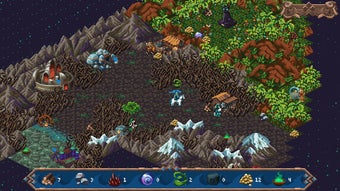
In this game, empire-level decision making meets encounter-level tactics. Players explore and expand across Eol while managing resources and faction influence in a 4X framework, then resolve conflicts through turn-based hex-grid combat. The structure pairs persistent world progression with repeatable tactical encounters, so play alternates between map-level strategy and individual battles driven by collectible cards and champion management.
How deep are the deckbuilding and tactical systems?
Here, players build and upgrade card decks that directly affect battlefield choices. The card system handles spellcasting, unit commands, and modifiers for champions. Key mechanical points include: hex-grid combat for positioning, card upgrades for mid- and late-game power shifts, and champion artifacts that change playstyle. The interaction rewards careful deck composition and tactical positioning rather than brute force alone.
What does the game look like and how is information presented?
On the tactical map, the aesthetic leans into expressive pixel art inspired by 90s adventure and strategy classics. Visual clarity favours readable unit sprites and distinct hex tiles, which helps identify threats and movement ranges during turns. Menus surface faction choices, champion stats, and card collections in compact panels so players can inspect upgrades without leaving the main screens.
Is it hard to get started and how does progression behave?
Across runs, progression layers empire growth, faction storylines, and hero leveling. Deckbuilding requires collecting and upgrading cards while champions gain levels and artifacts. The combination creates a deliberate learning curve because players must balance long-term expansion decisions with short-term card synergies. Minimum technical requirements are modest, listed as 2 GB RAM and a processor comparable to an i3, so hardware is rarely a blocker.
A focused pick for narrative strategy players, with a caveat about ongoing support
The game is a considered choice for players who enjoy strategic planning paired with tactical card play and branching narratives. However, active development is currently on hold and the community remains modest, which reduces the likelihood of frequent new content. Prospective players who value a finished, expanding multiplayer scene should note the development pause before committing long-term.